Media & Speaking
Senior Developers Virtual Lab
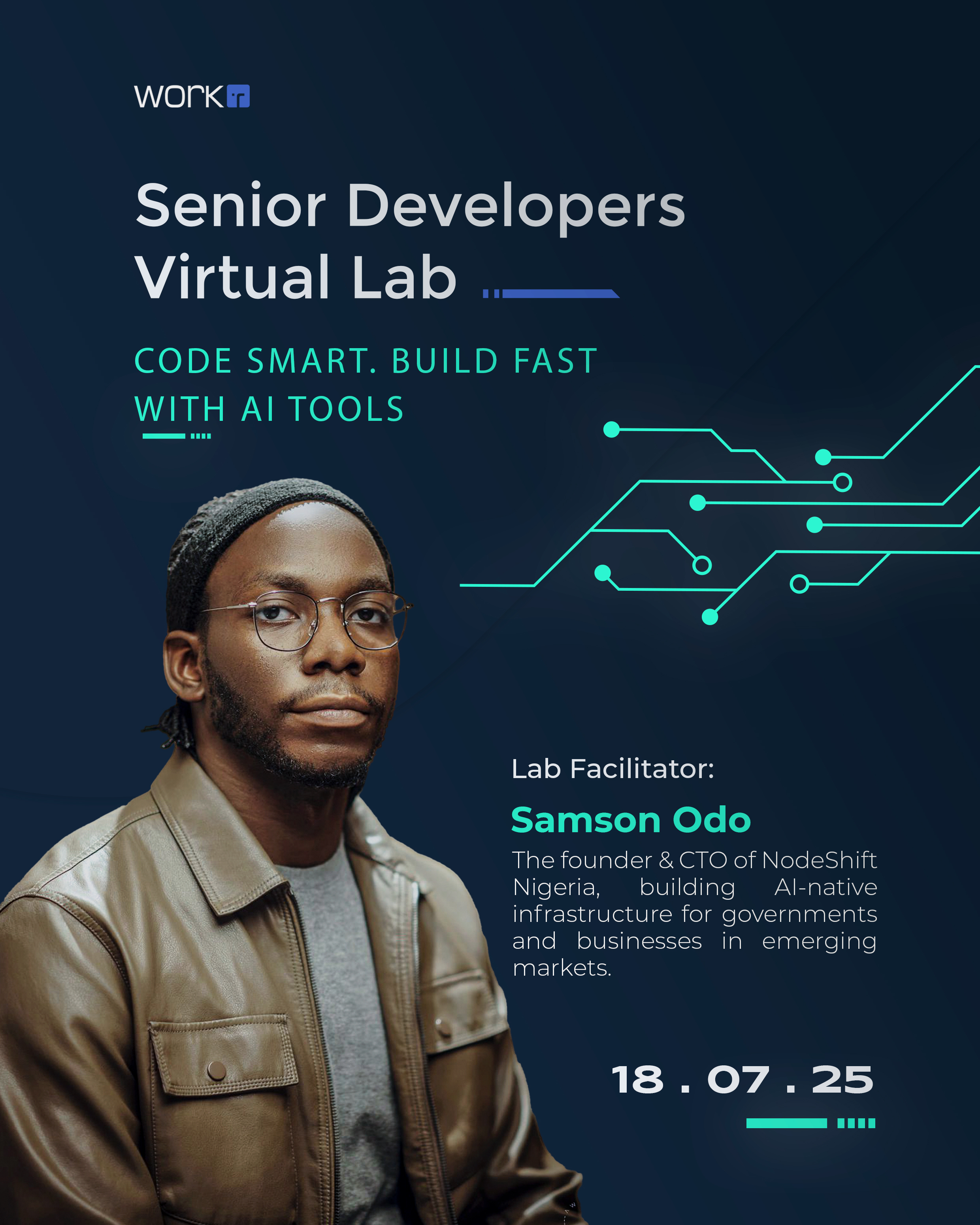
I was invited as a facilitator for the AI Senior Developers Virtual Lab, an interactive workshop for senior engineers, technical leads, and DevOps professionals held on July 18th 2025. My session focused on AI-enhanced development workflows, systems thinking, and practical tools to scale developer productivity using modular AI design and retrieval-based techniques.
📝 Session Summary
The session focused on the AI shift in software development, emphasizing that while AI brings speed and accuracy, true productivity requires context — the extra layer of information that ensures AI output aligns with system architecture and business logic.
I introduced systems thinking as a mindset shift for senior developers:
In software, nothing exists in a vacuum. Code, data, algorithms, and infrastructure all interact like different parts of a living system.
Using an analogy of building a house, I explained how:
- Code is like bricks – forming the structure.
- Data is the foundation – invisible but critical.
- Algorithms are the wiring and plumbing – hidden but essential.
- Infrastructure is the design and layout – shaping the user experience.
Not all buildings are the same, just as not all systems are built for the same purpose:
- A bank system prioritizes security and consistency
- A stadium (like a live-streaming app) prioritizes scale and throughput
- A factory focuses on efficiency and workflow
- An office building represents productivity tools, optimized for interaction and integration
- Some apps are like shacks — quick to build, but not made for scale
The materials may be similar, but the architecture and priorities change based on the system's purpose. Senior developers need to recognize what kind of system they're building and think like architects, while letting AI handle the repetitive work.
Smarter AI Systems
I then explored how AI systems can be made smarter by combining modularity, orchestration, and retrieval:
- Modular AI Workflows: Separate AI agents for writing, planning, debugging, and documentation.
- Model Context Protocol (MCP): Managing context persistence across tasks to avoid “AI amnesia.”
- Retrieval-Augmented Generation (RAG): Using real data sources (docs, wikis, repos) to ground AI outputs.
Practical Demos
To demonstrate these principles, I showcased:
Multi-Step Workflow with Zapier:
A no-code pipeline where an AI “Writer” generates product requirements, then a “Planner” produces detailed development steps. Outputs are saved in Google Sheets to mimic memory.No-Code RAG Chatbot:
A simple chatbot connected to uploaded documents, demonstrating retrieval-based answers over guessing or hallucination.
These demos proved that AI-enhanced development pipelines don’t require complex setups—no-code tools like Zapier can replicate MCP concepts and improve collaboration between teams.
Key Takeaways
- AI is leverage, not magic. It’s powerful only when combined with context and thoughtful system design.
- Think like an architect. Understand the interplay of code, data, algorithms, and infrastructure.
- Design AI-enhanced systems. Use MCP and RAG to build workflows that are robust, scalable, and context-aware.
📚 Resources
- Presentation PDF: Download Presentation